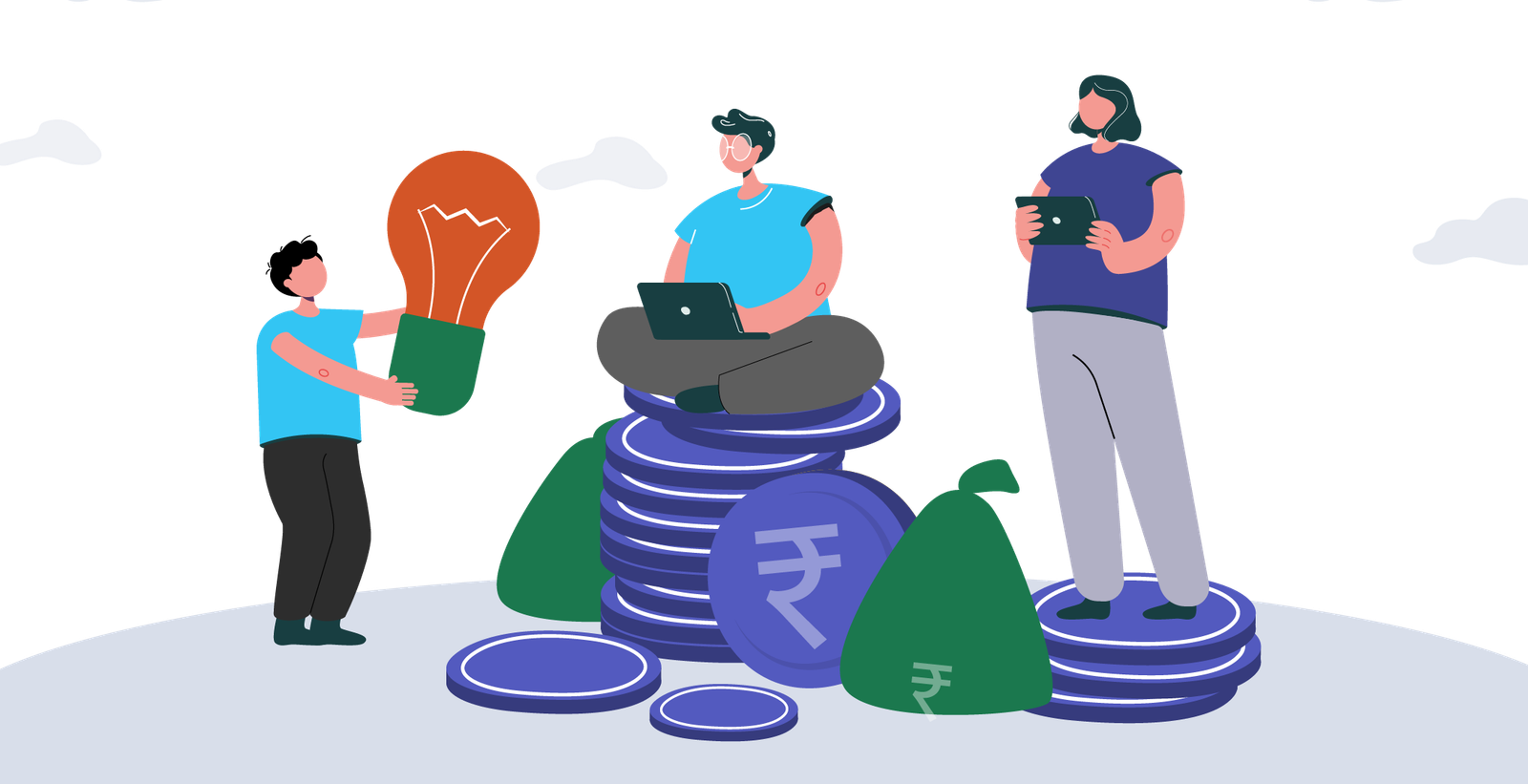
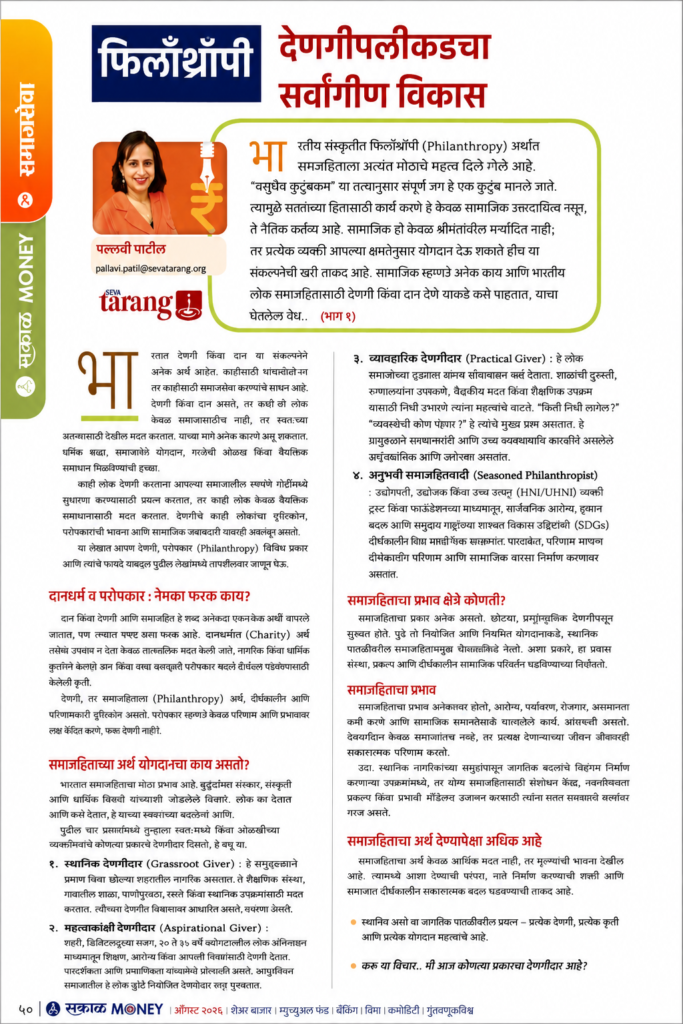
What Is Philanthropy?


What Is Philanthropy?
How different Indians think of “giving” – and why it’s not just charity
In India, the word “giving” can mean many things. For some, it’s slipping a few coins into a temple donation box. For others, it’s wiring a large sum to a children’s hospital after a visit. Yet others see giving as funding education for a village, starting a foundation, or even influencing policy that shapes how India develops.
These are all forms of philanthropy—but they sit at very different points on a spectrum. In this first article of our 12‑part series, we unpack what philanthropy really means in the Indian context, who the Indian givers are, and why even a small, regular contribution can be part of a larger nation‑building journey.
Philanthropy versus charity: What’s the difference?
Many people use “charity” and “philanthropy” interchangeably, but there is an important nuance.
- Charity is typically:
- Immediate, relief‑oriented (“help someone in urgent need”).
- Often emotional or ritual‑driven.
- Short‑term by design: a one‑time donation, an emergency fund, or a festival gift.
- Philanthropy is:
- Strategic and long‑term (“help change systems”).
- Focused on impact and outcomes, not just activities.
- Often structured through trusts, foundations, or planned giving programmes.
In simple terms:
- Charity says: “This person is suffering today; let me help.”
- Philanthropy says: “Why do so many people suffer in this way? Let me help fix the system.”
For readers of Sakal Money, think of philanthropy as another form of intentional investing—where instead of only investing for returns, you also invest your money for social returns.
What does philanthropy mean to different Indians?
In India, philanthropy is shaped by faith, family, and financial status. A recent mapping of Indian givers shows that people give for very different reasons—and those reasons often map loosely to income levels and life stages.
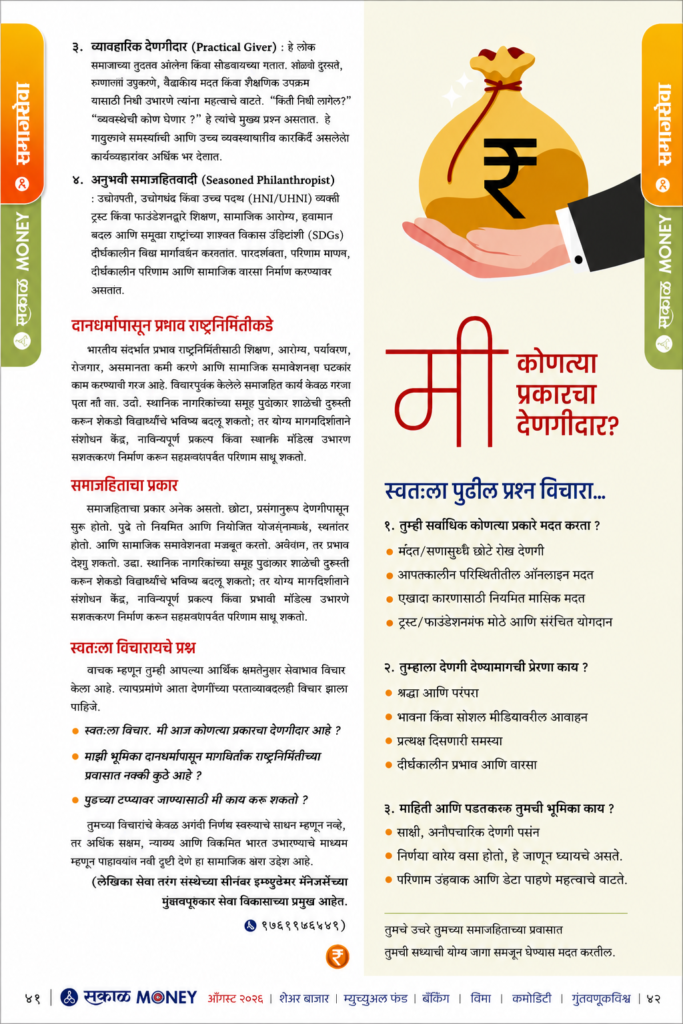
Here are four broad archetypes you may recognise in yourself or those around you:
- The Grassroot Giver (faith‑ and community‑driven)
Typically from smaller towns or rural India, this giver donates to:
- Temples, gurudwaras, mosques, and local religious institutions.
- Community causes such as village roads, water tanks, or school repairs.
Their giving is often:
- Deeply tied to festivals, rituals, and life events (weddings, deaths, anniversaries).
- Based on trust in the priest, community elder, or local NGO rather than formal reports.
For many, this is the first step on the philanthropy ladder—sometimes small in amount, but enormous in volume because of the sheer number of people.
- The Aspirational Giver (young, urban, digitally aware)
Often a salaried professional or small‑business owner in their 20s–30s, this giver:
- Donates to disaster relief, education campaigns, or health appeals shared on social media.
- Uses UPI, apps, and websites to send money, sometimes on a one‑off or recurring basis.
Their motivations include:
- A sense of empathy and social responsibility.
- The desire to “do something meaningful” alongside career and family commitments.
Because they are digitally comfortable, they are also the most likely to evolve into regular, more strategic givers as their income grows.
- The Practical Giver (problem‑solver, need‑based)
This giver sees giving as a way to solve a visible problem:
- A school that needs renovation.
- A hospital ward that needs equipment.
- A family member’s medical treatment.
They often:
- Prefer giving to “tangible” outcomes they can see or visit.
- Ask questions like: “How much will this project cost?” and “Who will manage it?”
This profile is common among mid‑career professionals and small‑business owners who want clarity and control over where their money goes.
- The Seasoned Philanthropist (high‑net‑worth, impact‑oriented)
These are high‑net‑worth and ultra‑high‑net‑worth individuals, often from business families or successful entrepreneurs, who:
- Use formal structures such as trusts, foundations, or philanthropy‑centric institutions.
- Focus on long‑term issues like education reform, climate‑resilient livelihoods, or public health.
They usually:
- Think in terms of “legacy” as much as “impact.”
- Collaborate with NGOs, think tanks, and sometimes even government agencies.
For these givers, philanthropy is not an add‑on; it is a core part of how they want to be remembered—and how they hope to shape India’s development story.
From charity to nation building: The bigger picture
So where does “nation building” fit into all this?
Nation building in the Indian context means:
- Strengthening systems in education, health, environment, and livelihoods.
- Reducing inequality and improving access to opportunity.
- Building institutions that can last beyond any one individual or government.
Philanthropy, when done thoughtfully, can play a powerful role here. For example:
- A small group of grassroot givers can repair a school building, improving learning for hundreds of children.
- A seasoned philanthropist can fund a research centre or pilot a model that the government later scales up.
Over time, many people move from charity (small, emotional, one‑time) to philanthropy (larger, planned, systemic). This movement is sometimes called a philanthropy life cycle:
- You start with small, spontaneous giving.
- You move to regular, structured giving.
- You grow into larger, impact‑driven giving.
- Eventually, you may help shape policy, institutions, or the broader narrative of India’s development.
Questions to ask yourself as a reader
As someone who reads Sakal Money, you are likely financially savvy and thinking about returns—on investments, on education, on health. This series will ask you to think about returns on giving too.
After reading this article, you can ask:
- “Which archetype of giver am I today?”
- “Where do I sit on the spectrum: from charity to nation‑building philanthropy?”
- “If I wanted to move one step up, what would that look like in practical terms—for my income, my time, and my values?”
Preview of the series: What comes next
In the coming articles, we will explore:
- How India has changed the way it gives over the last 20 years.
- Who is really funding India’s social sector: private givers, companies, and government.
- How to measure impact—because effective giving is not just about how much you give, but what it achieves.
By the end of this 12‑part series, our goal is simple: to help you see your money not only as a means of wealth creation, but also as a tool for building a stronger, fairer India.
Simple “Giver Self‑Check”
Answer these three questions informally:
- What kind of giving do you do most often?
- Small cash donations at temples/festivals.
- Small online donations for emergencies.
- Regular monthly support to one cause.
- Large, structured gifts through trusts or foundations.
- What motivates your giving?
- Faith and tradition.
- Emotion (a story on social media, a friend’s appeal).
- Clear problems you can see (school, hospital, community).
- Long‑term impact and legacy.
- How comfortable are you with structure and information?
- You prefer simple, informal giving.
- You want to know who is managing the money and how it is used.
- You want to see impact reports and data.
Your answers will help you place yourself on the “philanthropy life cycle” and understand where you might want to grow.
In the next article, we’ll take a closer look at how India gives today—and how different it is from 20 years ago—so you can see where your own journey fits into the broader story of Indian philanthropy.
Published in the Marathi edition of Sakal Money – August 2026
Recent Blogs